Technical Assistance II
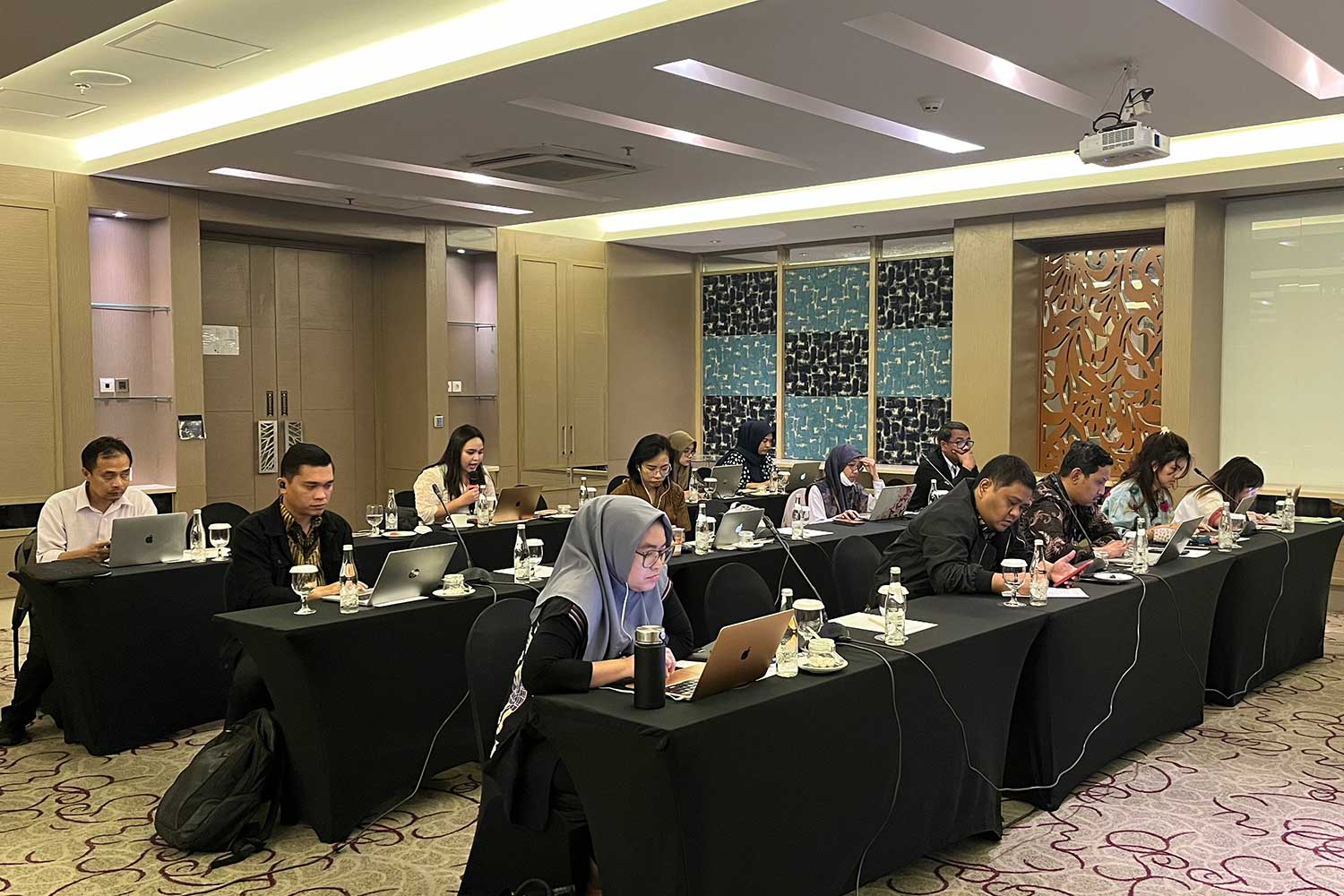
Recently, a capacity-building workshop was conducted to explore the trends, scope, and implementation of trade and environmental provisions in current international trade cooperation frameworks, with a particular focus on implications for Indonesia. Organised on January 24, 2024, by the Directorate General of International Trade Negotiation (DG ITN) of the Ministry of Trade (MoT), in collaboration with ARISE+ Indonesia, this hybrid event convened trade negotiators and policymakers from various ministries, including Trade, Foreign Affairs, Environment and Forestry, and National Development Planning/Bappenas.
The workshop is part of a broader capacity-building program, which includes developing a paper on environmental provisions in trade agreements and delivering sessions by Paul Baker and Loan Lee, ARISE+ Indonesia's senior experts from International Economics Consulting. These activities, coordinated by Widdi Mugijayani, ARISE+ Indonesia Trade Policy Senior Expert, aim to enhance Indonesia's proficiency, especially in non-tariff measures (NTMs), trade reform, and sustainability.
The paper outlines the dual role of trade in relation to climate change, acknowledging both its contribution to greenhouse gas emissions and its potential as a part of the solution through mitigation and adaptation policies. It notes that trade is responsible for a significant portion of greenhouse gas emissions, primarily from the energy and transportation sectors (as stated by the World Trade Organization, 2021). However, it also acknowledges the positive impacts trade can have, such as facilitating the exchange and development of green technologies, climate-friendly products, and best practices to reduce environmental damage.
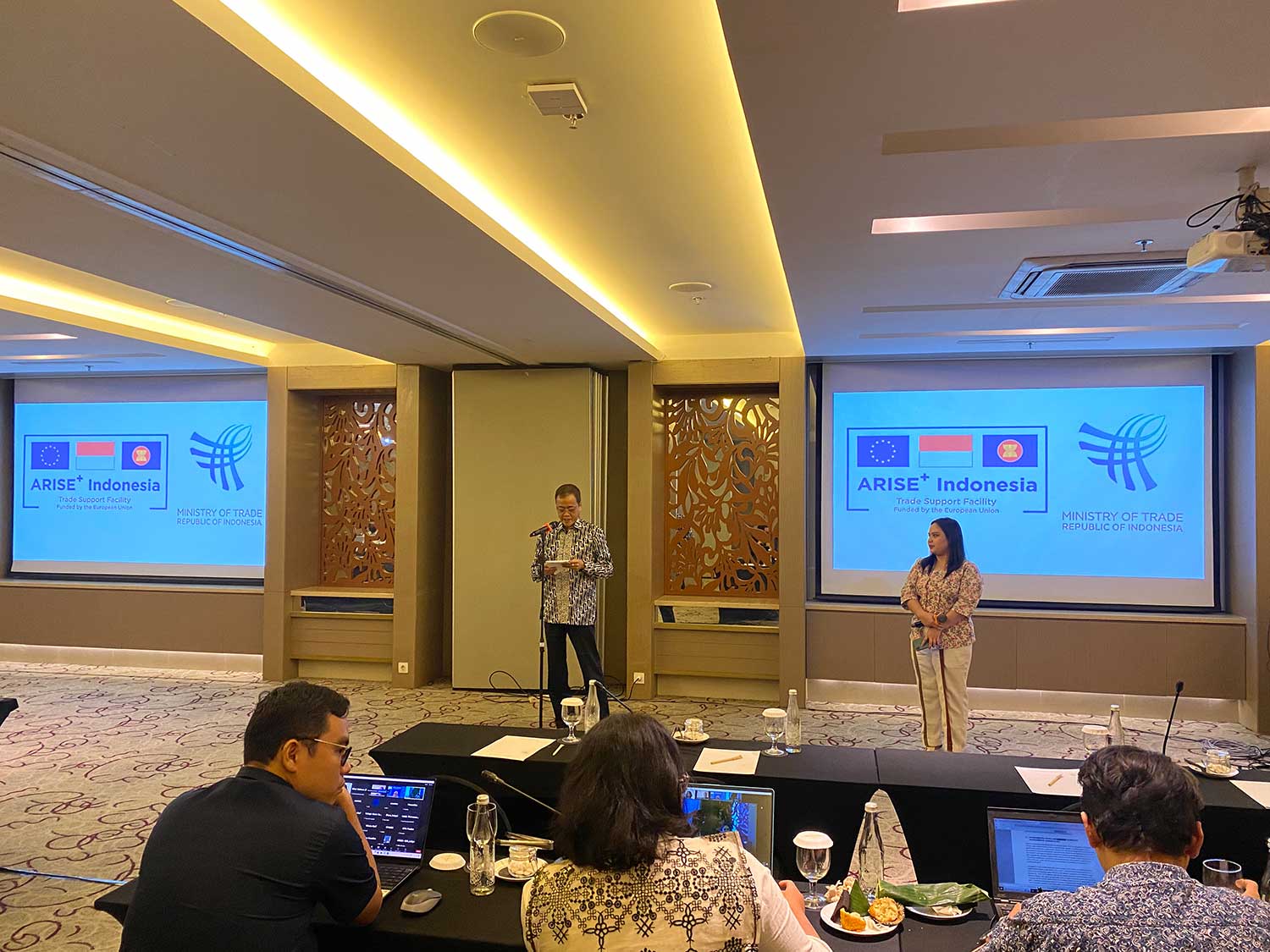
Ari Satria, Secretary General for DG ITN, underscored the importance of this perspective for Indonesia. He highlighted the country's initiatives to capitalize on the export potential of Environmental Goods (EGs) and plastic substitutes. These efforts are in line with its goal to transition towards a more environmentally sustainable economy, a key step in its journey to becoming a high-income country.
Mr Ari emphasised Indonesia's commitment to climate actions while ensuring that trade continues to benefit economic growth and poverty alleviation. As a developing country, he pointed out Indonesia's need for more time and capacity building to adopt and implement low-carbon technologies.
"The harmonization of our trade policy with environmental goals is essential. I am optimistic that this workshop will contribute valuable insights for developing policy recommendations, shaping our national position, and bolstering our role in negotiations related to trade and the environment," expressed Mr Ari.
Wijayanto, the Director of the World Trade Organization Negotiation, under the DG ITN of the Ministry of Trade, highlighted data from the WTO database showing a significant increase in environmental measures by WTO members in recent decades. He pointed out that in 2022, there were 3599 environmental measures, a substantial rise from 2250 in 2021. This increase in multilateral environmental commitments played a significant role in addressing environmental degradation, especially in the context of climate change.
"Our officials must cultivate a deeper knowledge of the interconnectedness of trade and environmental concerns. Striking the right balance between these two critical areas is key to our policy success," Mr Wijayanto stated.
The workshop aimed to serve as a key platform to pool collective expertise, broaden understanding, create a common framework for addressing these challenges, and enhance coordination among various stakeholders.