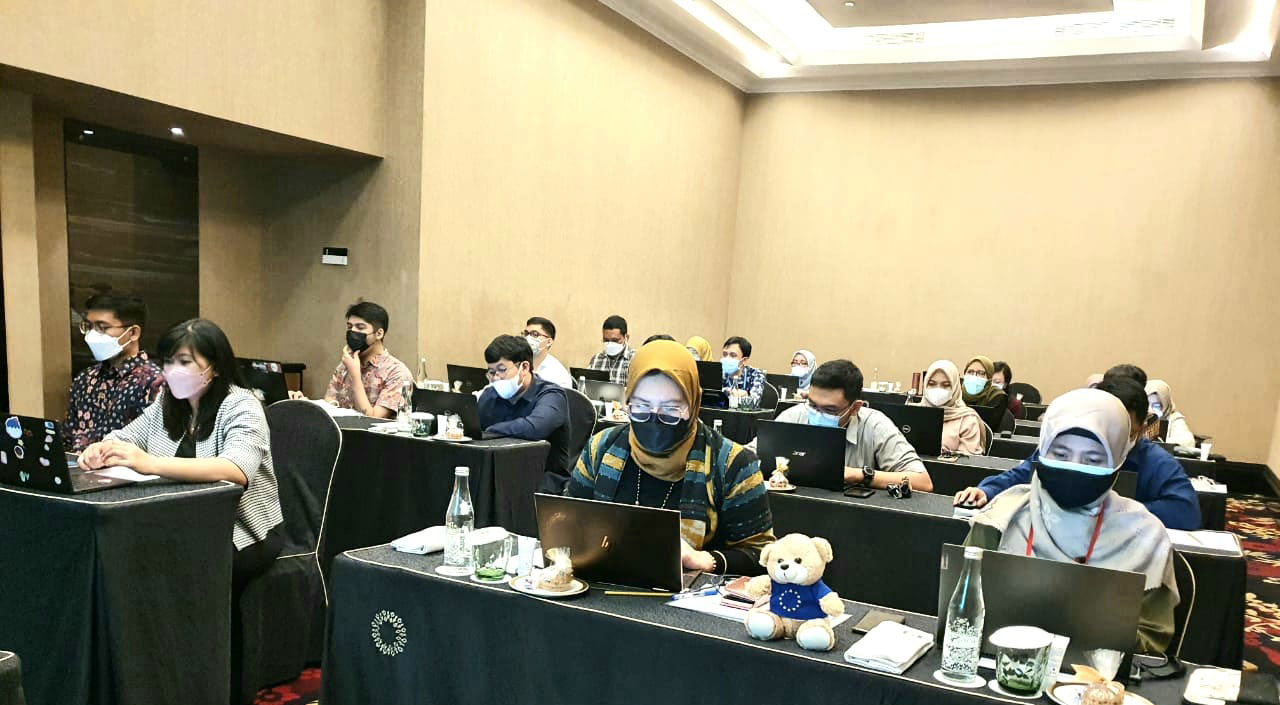
In an effort to improve its trade and investment policy planning capacity, the Ministry of National Development Planning (Bappenas) put in place a training course on the Global Value Chains (GVCs) analysis with the support of ARISE+ Indonesia. Bappenas's economic analysts and planners took part in the first module training on 17-20 January 2021.
The training is a follow-up of studies conducted in 2021 that assessed the impact of Covid-19 on GVCs relevant to Indonesian export. The training aims to enhance Bappenas technical officers' capacity in performing sectoral analysis using the methodology and quantitative analysis tools applied for the study.
The Director of Trade, Investment, and International Economic Cooperation of Bappenas, Ms PN Laksmi Kusumawati, underlined the importance of GVC analysis to feed policy development in the framework of the Medium-term National Development Planning.
About 70% of international trade today is organised around Global Value Chains. The whole process of building up a product from raw materials to the final product takes place across different countries worldwide.
"The deepening our country’s integration into GVCs will enhance productivity and competitiveness to foster robust economic growth and spur economic recovery," Ms Kusumawati said.
The training will enable Bappenas technical officers to gain insights into sectoral GVC composition using tools such as the MRIO tables and trade flow analysis. Participants will learn the methodology, data collection, modelling, and analysis through visual tools during the four-day training.
The training is planned based on two modules. The first module involved lecture-based sessions, coupled with installation and practice exercises to explore one of the specific sectors studied in the Sectoral Deep-dive Study. The second module, scheduled on 7-9 February, will focus on hands-on exercises GVC and trade flow analysis of a specific sector under the guidance of the trainers.
Paul Baker, an international trade economics expert, led the team of trainers. Neetish Hurry, an international trade economics expert specialising in developing trade models, methodologies, analytical and statistical tools, delivered the training virtually. The participants attended the training in person in Bandung.