Technical Assistance II
A study on Export Acceleration conducted by Bappenas and the the Center for Economic and Development Studies (CEDS) with support from ARISE+ Indonesia found that the contribution of Indonesia's exports to Gross Domestic Product (GDP) has been declining over the past two decades.
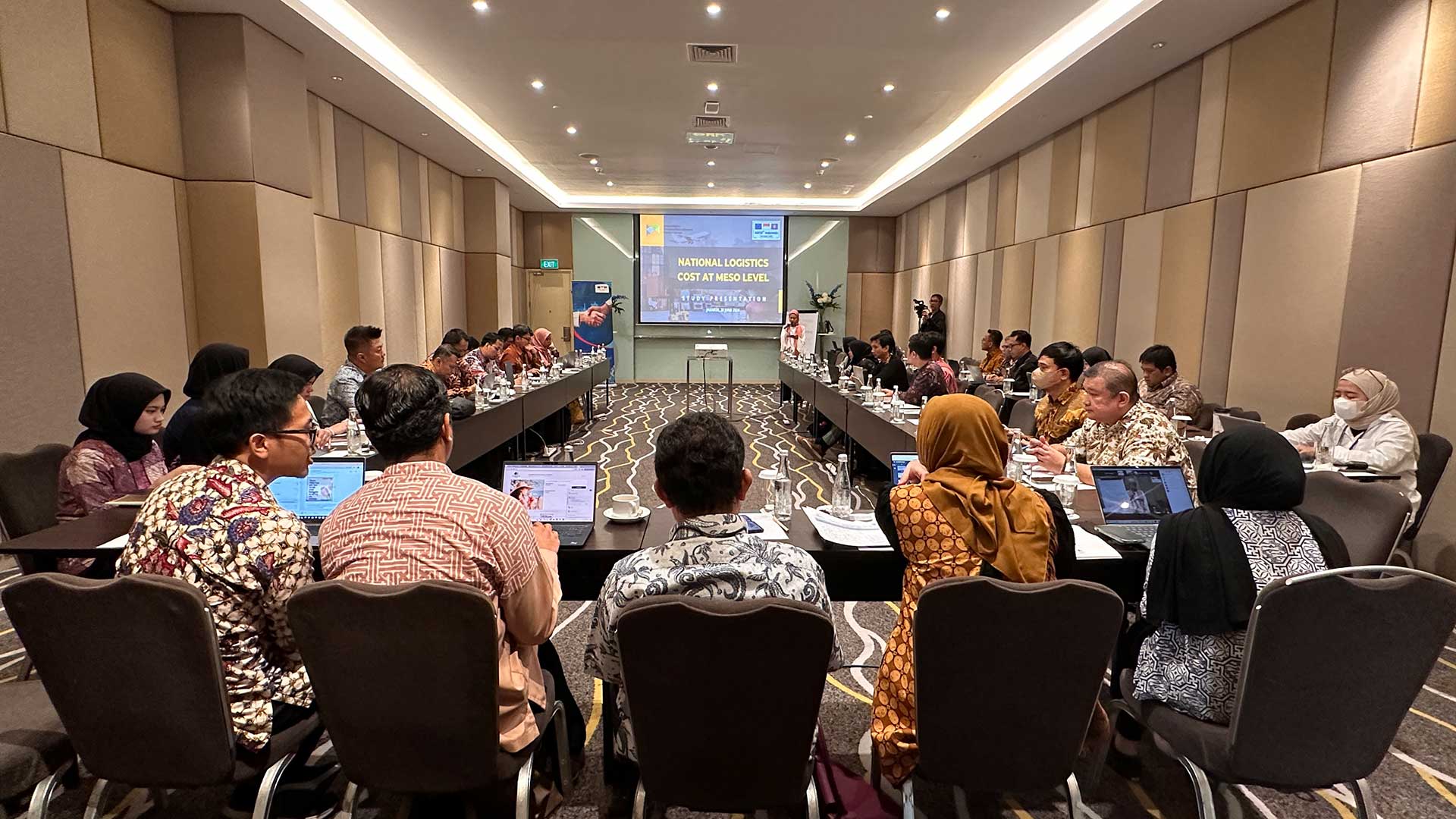
Some possible reasons for that decline include Indonesia's export structure being dominated by low-tech products, which do not meet the demand for medium and high-tech products in the global market, and Indonesia's low participation in the Global Value Chains (GVCs) compared to some other countries in Asia. As a result, Indonesia has low global market penetration. The study proposed strategies and action plans for improving Indonesia's export performance through sectoral policy reforms to accelerate goods exports and improve the competitiveness of the services sector. The draft study was presented on Friday, 10 March 2023, to stakeholders from relevant ministries and institutions.
The Director of Trade, Investment, and International Economic Cooperation at Bappenas, PN. Laksmi Kusumawati emphasised that export performance is crucial to achieving Indonesia's 2045 Vision, which aims to make Indonesia one of the top five high-income countries in the world. She explained that Bappenas and ARISE+ Indonesia conducted the study to identify challenges from the supply and demand sides, map relevant stakeholders, and develop action plans to accelerate exports.
"The action plans developed from the study will be crucial inputs for the Government Work Plan (RKP) 2024 and the early stage planning of RPJMN 2025-2029," Ms Laksmi said.
The study used several methods, including literature reviews, focus group discussions (FGDs), and in-depth interviews with government and private sector stakeholders to design and draft the Export Acceleration Grand Design. The analysis of goods exports focused on agriculture, fisheries, and manufacturing industries, including small and medium-scale manufacturing. One example of the study’s insights was that Indonesia's export value in the fisheries sector is relatively low compared to several countries with smaller territorial waters. Several barriers, such as licensing aspects, high investment requirements, limited financing and infrastructure, and high logistics costs, hinder the start-up stage. Additionally, non-tariff measures (NTMs) and sustainability and traceability requirements imposed by export destination countries hamper business actors related to export procedures.
The study proposes policy interventions for the fisheries sector such as evaluating and issuing technical guidelines, providing adequate financing and infrastructure, eliminating protections that impact cargo prices, standardising fishery products' feeding and supply chains, providing cold chain infrastructure facilities, and conducting socialisation for business actors.
Furthermore, the study explored several service sectors with significant export potential, including tourism, air transport, data centres, P2P lending, asset management, and franchising. The study revealed that Indonesia is a net importer in the services sector in general, but some service sectors, such as tourism and franchising, are seeing positive export trends. Thus, sector-specific policy changes are necessary to enhance the competitiveness of these services.
The findings and recommendations of this Grand Design will be complemented by two additional Grand Designs being finalised by Bappenas with the support of ARISE+ Indonesia - these cover Investment and Economic Cooperation. Details on their key respective findings will be shared in due course.