Technical Assistance II
Indonesia is currently the fourth-largest economy in Southeast Asia and has set its sights on becoming one of the top five economies in the world by 2045. To achieve this vision, the Indonesian government has identified strategic policies, including strengthening international economic cooperation. In this regard, the government should focus on four key areas: expanding market access and attracting more investment, improving domestic economic competitiveness, supporting sustainable development, and strengthening institutional strategy and coordination.
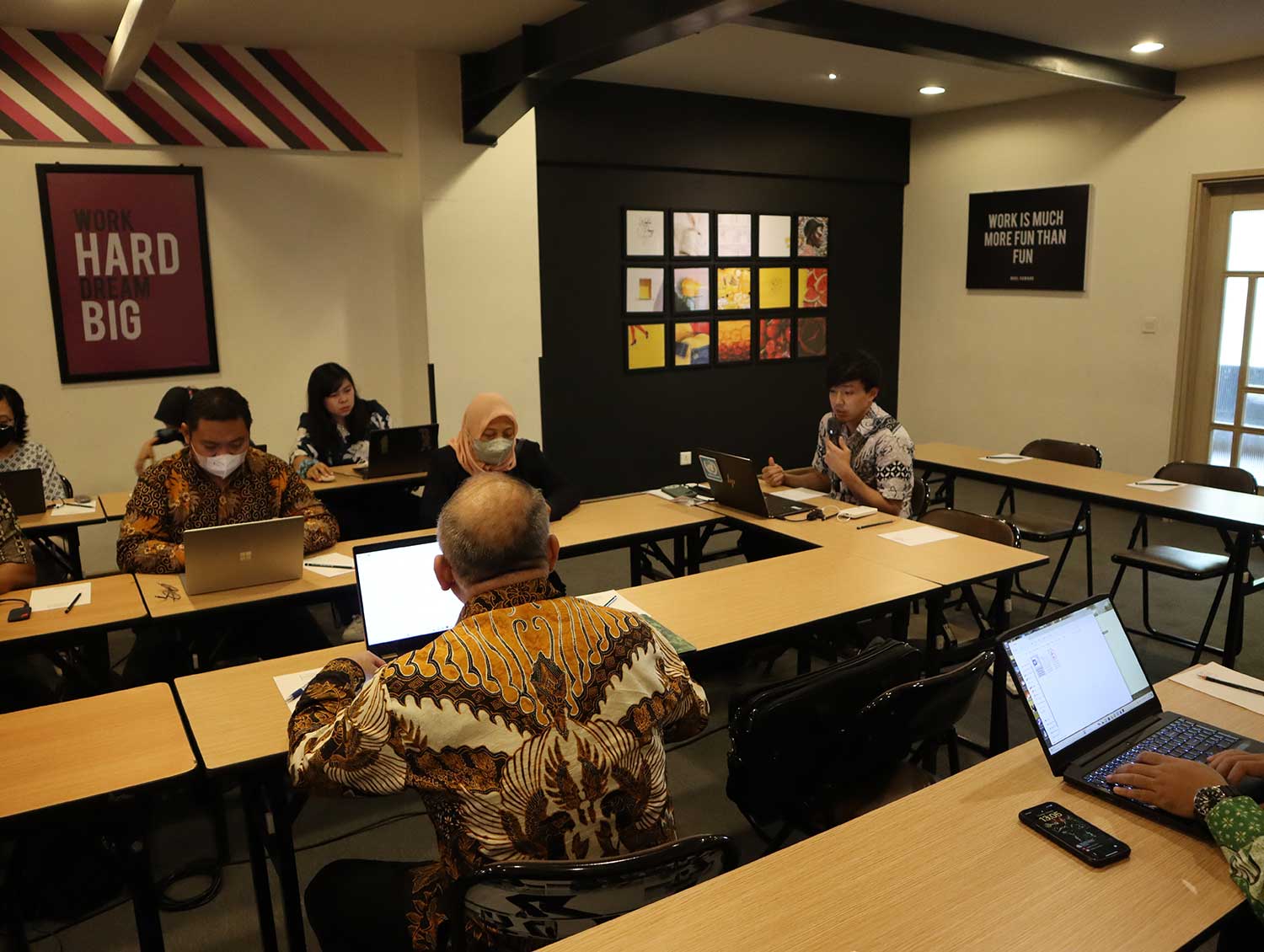
These recommendations were made in the Grand Design of International Economic Cooperation study, which was conducted jointly by the Ministry of National Development Planning/Bappenas and the Centre for Strategic and International Studies (CSIS) with support from ARISE+ Indonesia. The study was disseminated on 30 March 2023 to stakeholders from various ministries and think tank organisations, offering crucial insights into how Indonesia can strengthen its role and utilisation of international economic cooperation.
Speaking at the workshop on behalf of the Director of Trade, Investment and International Economic Cooperation, Arianto Hartono, Bappenas Policy Planner, expressed the importance of the study and its role in assisting Bappenas in the design and development of a Grand Design of Economic Cooperation, which will be used as part of the background study for the 2025-2029 National Medium-term Development Plan document (RPJMN) on economic cooperation.
"The study provides valuable insights into current Indonesia's economic diplomacy and the performance of its bilateral, multilateral, and regional economic partnerships and trade agreements for future strategic planning," Mr Hartono said.
The study comprehensively mapped current stakeholders and policy instruments and benchmarked selected countries' implementation and utilisation of trade agreements as references to develop action plans for stakeholders to integrate into their strategic planning.
The study received positive feedback from the stakeholders. Nur Rakhman Seytoko, Director of WTO Negotiations, Ministry of Trade, found the non-traditional issues, such as gender, environment, climate change, and labour, discussed in the study to be very interesting and relevant to current Indonesia's economic diplomacy since those are increasingly being requested by developed countries trading partners in trade agreements. He also provided input to the Grand Design of International Economic Cooperation study to review Trade in Services more thoroughly.
Dionisius Narjoko, Researcher at the Economic Research Institute for ASEAN and East Asia (ERIA), suggested that the study should also examine issues that may pose future challenges, including current development of regional economic architecture in ASEAN and East Asian, the new generation of FTAs such as Australia – Singapore FTA, as well as geoeconomics fragmentation and its potential implications for Indonesia. He also suggested that the study assess the need for a special institution to facilitate, monitor, and evaluate the implementation of trade agreements.
"This would enable business actors to derive maximum benefits from these agreements," Mr Narjoko said.