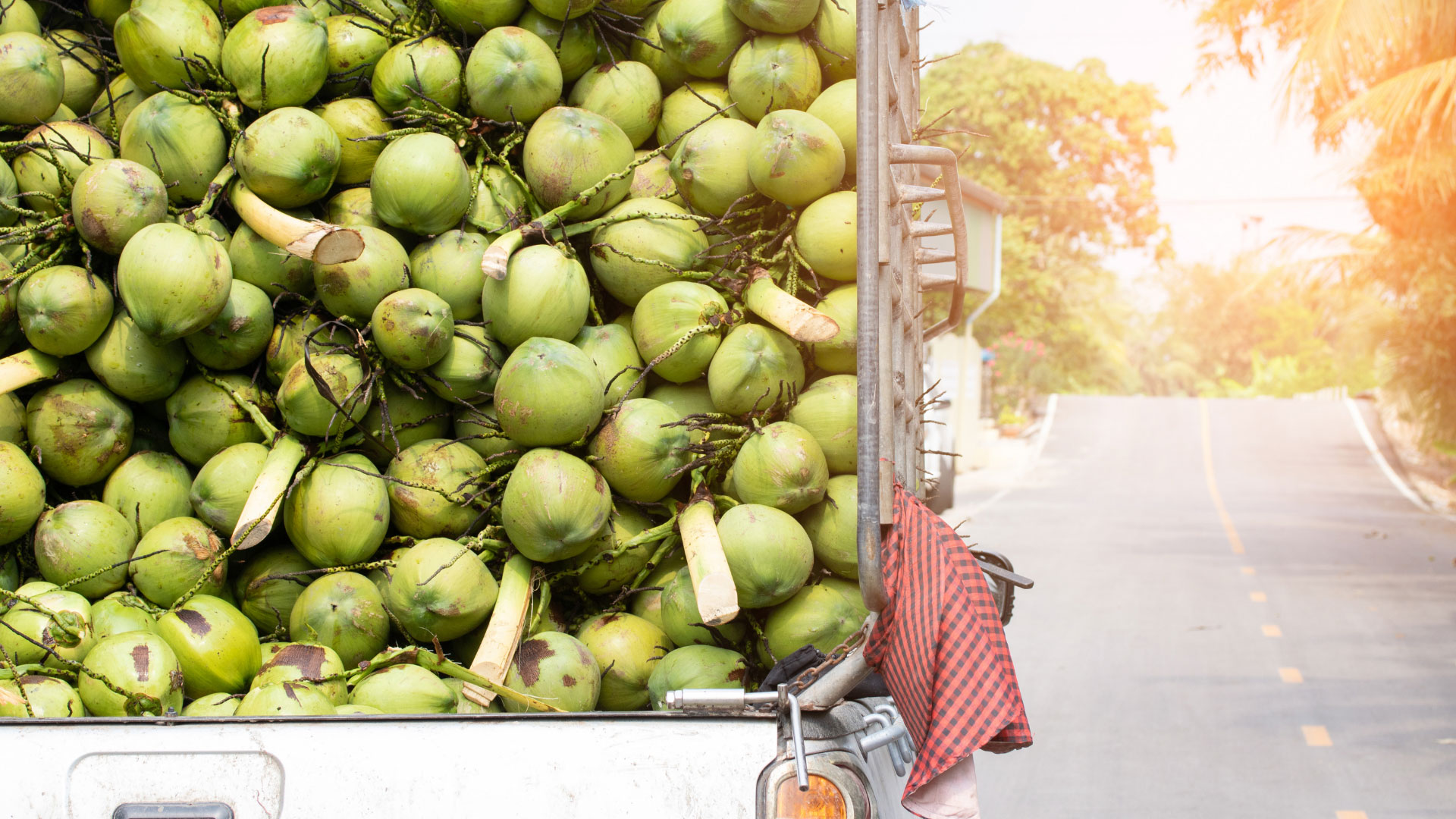
The coconut sector in North Sulawesi has more than one million tons of untapped export potential of coconut by-product worth IDR 1 trillion. With India and Sri Lanka having already reached their peak production in the coconut sector, opportunities are emerging for Indonesia to contribute to the supply chain. But logistics issues must be taken into consideration.
This is the main take-away point gathered from the SMEs Sensitisation Webinar on coconut commodity and its derivative products organised by Bappenas (the Ministry of Development Planning), with support from ARISE+ Indonesia, on Friday (12/11). The event is the third of a webinar series aimed to facilitate discussion between SMEs and foreign buyers on export opportunities and challenges on selected sectors that would inform the policymaking in streamlining support to SMEs in Indonesia.
The Director for SME Development and Cooperative of Bappenas, Dr Ahmad Dading Gunadi, said in his opening remarks that the Government is preparing an integrated support programme to strengthen SMEs in selected sectors, titled the Major Project. The project is expected to enhance the upstream and downstream value chain and provide better-added value to MSMEs.
He noted that the support and contribution of local governments are also important to achieve effective and efficient outcomes in strengthening the SMEs.
"We will launch the pilot project for the coconut sector next year in North Sulawesi as the second-largest coconut production centre in Indonesia," Mr Dading said.
Speaking at the webinar, Jelte Veenstra, the Director of Van der Knaap BV, a coconut importer from the Netherlands, stated that Indonesia has a huge potential to become one of the leading exporters in cocopeat. However, certification, production sustainability, and logistics are the issues that the Government of Indonesia should address to improve its export competitiveness.
Another coconut buyer from the Netherlands, Sinar Sitepu, the founder of Global Spices BV, pointed out that coconut provides a circular economy since every part of the coconut -the kernel, the water, the husk, the shell- could be utilised. He indicated the growing demand of halves coconut for bird food processing. He also agreed with Jelte and underlined the importance of certification, quality, continuity, eco-friendly and organic production in coconut to respond to global demands, especially the European market.
The Indonesian Trade Attaché in Netherland, Sabbat Christian Jannes Sirait, confirmed the opportunities of coconut in the European market. He also reminded the Indonesian SMEs of the importance of improving capacity and competitiveness, especially in terms of quality standardisation and production continuity that is still a challenge the Indonesian SMEs faced.
Finding international buyers and access to information remained the main barriers for SME exports. Not only the producers but the buyers sometimes faced the same challenge. The Head of Agricultural Technology Department of Sam Ratulangi University in North Sumatera, Dedie Tooy, while presenting the opportunities of the coconut sector in North Sulawesi, recommended establishing a digital platform to facilitate market linkages between coconut SMEs and foreign buyers.
Rajendra Singh, the Deputy Director at Nepal Trade and Export Promotion Center added that online promotion should visualise the products clearly and describe the products as vivid as possible.
Representatives from Bappenas, the Ministry of Trade, the Ministry of Industry, the Ministry of Cooperatives and SMEs, the European Union Delegation (EUD), provincial governments, business associations, entrepreneurs, and foreign buyers participated via Zoom or ARISE+ Indonesia Youtube channel. The Indonesian Trade Attaché in the Netherlands, Sabbat Christian Jannes Sirait; the Trade Attaché in Germany, Nurlisa Arfani; and the Trade Attaché in France, Ruth Joanna Samaria, joined the meeting.